
X growth is the process of increasing audience reach, engagement signals, authority indicators, and content visibility within the X ecosystem.
X visibility refers to the extent to which content is distributed across feeds, recommendations, search surfaces, engagement networks, and audience discovery systems. X engagement refers to measurable interactions that indicate audience attention, content relevance, and network participation. Within the platform, public relations and thought leadership operate as interconnected visibility mechanisms that influence how information spreads, how credibility forms, and how authority develops over time.
PR and thought leadership are complementary systems that shape public perception, authority development, and information distribution on X.
Public relations refers to the strategic management of visibility, reputation, and audience perception across digital communication environments. Thought leadership refers to the consistent publication of expertise-driven content that demonstrates knowledge, perspective, and authority within a specific subject area. On X, both systems intersect through content distribution and audience engagement. PR expands awareness by increasing exposure to information, while thought leadership strengthens credibility by demonstrating expertise. Together, they create a framework where visibility and authority reinforce one another.
The relationship exists because visibility without credibility generates awareness without influence, while expertise without visibility limits audience reach. X feed distribution mechanisms reward content that receives engagement signals, network amplification, and audience interaction. As a result, thought leadership content benefits from PR-driven visibility, while PR outcomes become more sustainable when supported by recognised expertise. This interaction creates cumulative authority across the platform.
Public relations influences visibility on X by increasing information exposure across audience networks.
Visibility on social platforms depends on content distribution. Distribution determines how frequently content appears within timelines, recommendations, repost networks, profile visits, and search results. PR activities contribute to this process by introducing information into broader audience ecosystems. Every mention, discussion, repost, and reference expands the potential reach of a message.
Content visibility increases when information enters multiple audience clusters simultaneously. PR contributes to this expansion by encouraging distribution across interconnected networks. Network effects emerge when engagement activity introduces content to audiences beyond the original follower base. As information travels through different communities, visibility signals strengthen and reach expands.
The platform evaluates engagement activity as evidence of audience interest. Higher interaction levels increase distribution opportunities. PR therefore functions as a visibility accelerator because it expands exposure opportunities across multiple audience segments. This process increases discoverability and strengthens platform presence.
Thought leadership builds authority on X through consistent expertise demonstration and knowledge distribution.
Authority refers to the degree of trust, credibility, and recognition associated with an account or content creator. Thought leadership establishes authority by repeatedly publishing valuable insights related to a defined topic area. Over time, audiences associate the profile with expertise, creating stronger credibility signals.
Authority formation depends on consistency. Individual posts create visibility opportunities, but recurring educational content develops recognition patterns. The platform’s audience begins identifying the account as a source of reliable information. This recognition increases audience engagement and strengthens profile credibility.
Thought leadership also influences audience expectations. When users consistently encounter insightful content from the same profile, engagement behaviour becomes more predictable. Audiences interact more frequently because expertise has already been established. This cycle strengthens authority indicators and improves overall influence within the network.
Authority indicators are measurable signals that reinforce expertise and credibility.
Key authority indicators include:
Each indicator contributes to stronger credibility signals that influence audience perception and engagement behaviour.
Engagement signals connect PR and thought leadership by influencing both visibility and authority simultaneously.
Engagement signals include reposts, replies, likes, profile visits, bookmarks, mentions, and discussion activity. These interactions provide evidence that audiences find content relevant or valuable. Platform distribution systems use these signals to determine content relevance and reach potential.
PR initiatives often generate initial attention and exposure. Thought leadership content then converts that attention into sustained engagement through expertise-driven discussions. The combination creates a feedback loop where visibility generates engagement and engagement increases visibility.
This relationship is important because audience interaction performs two functions simultaneously. First, it increases content distribution opportunities. Second, it reinforces credibility through visible social validation. As engagement accumulates, both authority and visibility improve across the platform.
Content distribution affects authority development because expertise requires visibility before recognition can occur.
Authority is not solely created through knowledge. Recognition requires audiences to repeatedly encounter expertise-based content. Distribution determines whether information reaches relevant communities and whether authority indicators become visible.
Content that remains confined to a limited audience generates restricted influence. Broader distribution creates additional opportunities for audience discovery, engagement, and recognition. As exposure increases, authority becomes more widely acknowledged across the platform.
Repeated exposure also contributes to familiarity. Familiarity strengthens audience trust because users encounter consistent expertise over time. This process gradually transforms visibility into authority and authority into influence. Distribution therefore serves as a foundational mechanism in authority development.
Social proof functions as a credibility signal that influences audience perception and content engagement.
Social proof refers to observable indicators that demonstrate audience approval, trust, attention, or recognition. On X, social proof appears through engagement activity, audience growth, mentions, repost networks, and community participation. These signals provide evidence that content has generated meaningful audience interest.
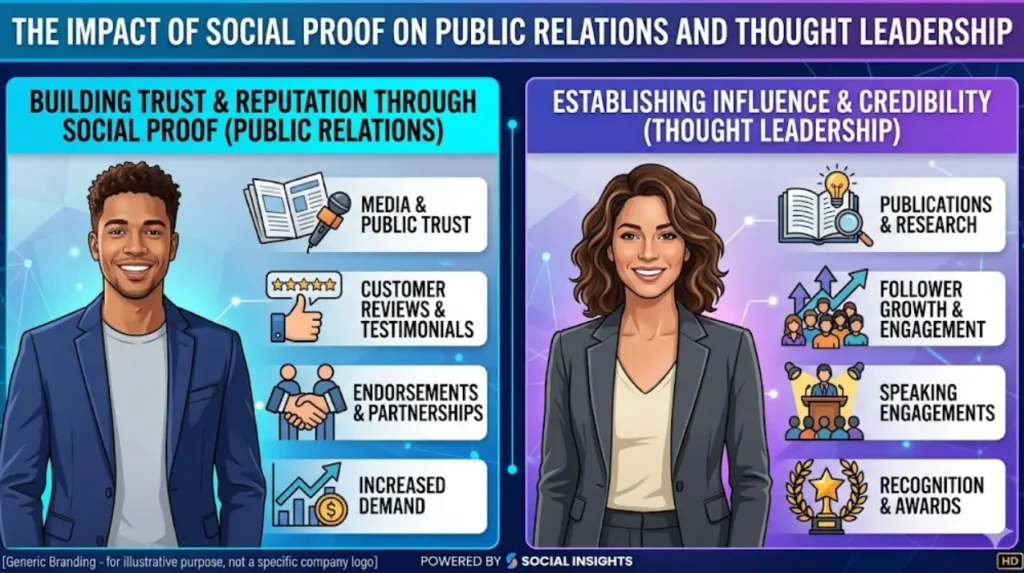
PR benefits from social proof because audience interaction validates visibility efforts. Thought leadership benefits because engagement demonstrates that expertise resonates with relevant audiences. Together, these signals strengthen public perception and reinforce authority indicators.
Social proof also affects audience behaviour. Users evaluate existing engagement when determining whether content deserves attention. Visible interaction creates perceived relevance, encouraging additional engagement. This process amplifies distribution and expands reach through cumulative audience participation.
Network effects strengthen visibility and influence by expanding content distribution through interconnected audiences.
A network effect occurs when audience participation increases the value and reach of content. Every interaction introduces information to additional users, creating opportunities for wider distribution. As engagement grows, content enters new audience clusters and reaches previously disconnected communities.
PR activity often initiates network expansion by increasing exposure. Thought leadership sustains network growth by providing content that encourages discussion and sharing. Together, they create conditions for continuous audience expansion.
Network effects contribute directly to influence development. Influence emerges when content consistently reaches relevant audiences and shapes ongoing conversations. As networks expand, opportunities for authority recognition and engagement increase. This strengthens both profile visibility and perceived expertise.
Audience trust is the foundation of long-term authority and sustainable visibility.
Trust refers to audience confidence in the accuracy, reliability, and consistency of information. On X, trust develops through repeated exposure to credible content and transparent communication. Both PR and thought leadership contribute to this process through visibility and expertise.
Thought leadership establishes trust by demonstrating knowledge and analytical depth. PR supports trust by maintaining consistent public perception and information clarity. Together, these systems create stronger credibility signals across the platform.
Trust also influences engagement behaviour. Audiences engage more frequently with sources they recognise as reliable. Increased engagement strengthens distribution opportunities and reinforces authority indicators. As trust grows, visibility becomes more sustainable and influence becomes more resilient.
Combining PR and thought leadership influences audience growth by connecting visibility expansion with authority development.
Audience growth occurs when new users discover content, perceive value, and continue engaging with a profile over time. PR contributes to discovery by increasing information exposure. Thought leadership contributes to retention by providing expertise that encourages continued audience participation.
The combination creates a balanced growth mechanism. Visibility introduces audiences to content, while authority encourages ongoing engagement. This relationship supports stronger follower acquisition, community development, and audience retention.
The topic of combining X PR with thought leadership for brand growth highlights how visibility systems and authority systems operate together within social media ecosystems. Audience growth becomes more sustainable when exposure and expertise function as interconnected components of the same influence framework.
PR and thought leadership shape public perception by influencing how audiences interpret credibility, expertise, and relevance.
Public perception refers to the collective understanding audiences develop about a profile, topic, or information source. Perception forms through repeated exposure, engagement activity, content consistency, and credibility indicators. Every interaction contributes to this process.
PR influences perception by increasing awareness and controlling information distribution. Thought leadership influences perception by demonstrating expertise and reinforcing authority. Together, they create stronger associations between visibility and credibility.
As audiences repeatedly encounter expertise-driven content supported by engagement and distribution signals, perception becomes more stable. This stability strengthens authority, increases trust, and reinforces influence throughout the platform ecosystem.
PR and thought leadership operate as interconnected systems within the X ecosystem. PR expands visibility through information distribution, audience exposure, and network participation. Thought leadership develops authority through expertise demonstration, credibility formation, and knowledge sharing.
Engagement signals, social proof, network effects, content amplification, audience trust, and authority indicators connect these systems together. Visibility supports authority development, while authority strengthens audience engagement and influence. Understanding this relationship explains how public perception, audience growth, and digital influence evolve across social media environments.