
Becoming a Twitter thought leader in an industry requires sustained authority development, audience trust accumulation, content relevance, and effective visibility generation within the X ecosystem.
X growth strategies differ based on authority-building objectives, audience acquisition methods, content distribution models, and engagement frameworks. X audience development methods are evaluated through audience quality, engagement consistency, visibility indicators, and long-term influence growth. Content amplification approaches on X are measured through distribution efficiency, audience reach expansion, engagement quality, and authority reinforcement.
Content-led growth creates recognition through expertise distribution, while engagement-led growth creates recognition through network participation and audience interaction.
Content-led growth is a visibility framework based on publishing original insights, industry analysis, educational commentary, and knowledge-focused content. X operates by evaluating audience response signals and distributing content across relevant interest networks. High-value informational content generates authority indicators because audiences associate expertise with consistent topic relevance. This approach strengthens profile authority and supports long-term audience trust. Visibility originates from content quality and informational utility rather than interaction volume.
Engagement-led growth operates through replies, discussions, quote posts, and conversation participation. This method increases exposure by inserting profiles into active audience networks. Visibility indicators emerge from interaction frequency rather than content ownership. Engagement-led approaches create faster discovery opportunities because audiences encounter profiles repeatedly across conversations. However, authority accumulation depends on the quality of contributions rather than engagement volume alone.
Content-led growth demonstrates stronger authority development because expertise remains attached to original content assets. Engagement-led growth demonstrates stronger network penetration because audience exposure occurs through existing conversations. The most sustainable thought leadership frameworks integrate both mechanisms while maintaining a primary focus on expertise distribution.
Organic growth strategies prioritise audience trust development, while amplification-focused approaches prioritise distribution expansion.
Organic growth is audience development generated through content relevance, engagement quality, and consistent profile activity. X operates by connecting content with audiences based on behavioural relevance signals. Organic audience growth produces stronger audience quality because followers engage due to informational alignment rather than temporary exposure. Authority indicators develop naturally through repeated interaction and expertise recognition.
Amplification-focused approaches concentrate on increasing content visibility across larger audience segments. Content amplification refers to mechanisms that extend distribution beyond existing follower networks. These methods accelerate audience reach and increase visibility velocity. Amplification frameworks generate stronger short-term exposure because content enters additional discovery pathways. However, exposure expansion alone does not guarantee authority development.
Organic growth demonstrates stronger sustainability because audience relationships are built through consistent value exchange. Amplification-focused approaches demonstrate greater scalability because content can reach larger audiences in shorter periods. Evaluation depends on whether the objective is authority accumulation or visibility acceleration.
Audience acquisition expands reach, while audience retention strengthens influence and engagement quality.
Audience acquisition refers to attracting new followers and introducing content to previously unreached audiences. Growth mechanisms include content distribution, engagement visibility, topic relevance, and network effects. Acquisition frameworks are measured through audience growth velocity, reach expansion, and visibility performance. Strong acquisition strategies increase profile discovery opportunities and expand authority potential.
Audience retention refers to maintaining recurring audience engagement and preserving follower relevance over time. Retention mechanisms focus on consistency, topical alignment, content quality, and expectation fulfilment. Retained audiences interact more frequently, contribute stronger engagement signals, and reinforce authority indicators. Retention therefore influences engagement quality more directly than acquisition.
Acquisition creates scale while retention creates stability. Profiles with rapid acquisition but weak retention frequently experience declining engagement efficiency. Profiles with strong retention demonstrate more reliable authority development because audience trust remains intact across extended periods.
Audience development can be evaluated through five primary indicators:
These indicators provide a more accurate assessment than follower growth alone.
X distributes content through relevance systems that evaluate engagement signals, audience interests, interaction patterns, and network relationships.
Content distribution is the process through which posts move beyond direct followers and reach wider audiences. X operates by analysing behavioural indicators associated with audience engagement. Posts generating strong interaction quality receive broader exposure across recommendation systems and interest-based feeds. Distribution efficiency depends on audience relevance rather than publication frequency alone.
The platform evaluates engagement signals including replies, reposts, bookmarks, profile visits, and discussion activity. These signals indicate content value and audience interest. Strong performance increases distribution opportunities because the platform identifies greater relevance potential. Weak engagement limits visibility expansion and reduces amplification opportunities.
Distribution mechanisms influence thought leadership development because visibility determines expertise exposure. Profiles receiving consistent content distribution have greater opportunities to establish authority, attract relevant audiences, and reinforce credibility indicators.
Expertise-focused authority methods produce stronger thought leadership signals than visibility-focused tactics.
Authority building refers to the process of establishing credibility, expertise recognition, and audience trust. Thought leadership signals emerge when audiences repeatedly associate a profile with valuable information and informed analysis. Authority indicators include discussion references, audience engagement quality, topic consistency, and expertise recognition.
Visibility-focused tactics prioritise exposure volume and audience reach. These methods increase profile discovery opportunities and improve short-term distribution performance. Visibility alone does not establish expertise because audiences evaluate informational value independently from exposure frequency.
Authority-focused methods strengthen long-term influence because they create durable credibility associations. Audiences develop trust through repeated exposure to relevant analysis and informed commentary. This process generates stronger engagement quality and more sustainable profile growth than visibility tactics alone.
Thought leadership approaches distribute expertise, while promotional content strategies distribute attention toward specific objectives.
Thought leadership content is educational, analytical, and insight-driven. X operates by rewarding audience engagement with information that contributes to understanding or discussion. Thought leadership strengthens profile authority because audiences recognise expertise and informational value. Visibility generated through expertise tends to reinforce credibility indicators.
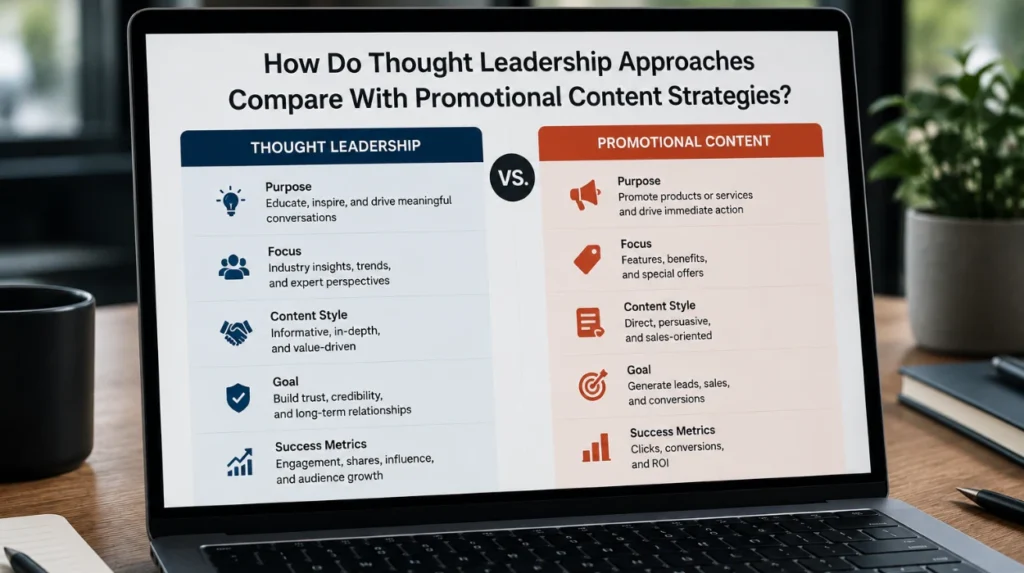
Promotional content focuses on directing audience attention toward a defined outcome. Visibility generated through promotional activity often depends on message repetition and exposure frequency. While promotional approaches can generate audience reach, authority development remains limited because expertise signals are secondary to promotional objectives.
Thought leadership approaches demonstrate stronger sustainability because authority compounds over time. Promotional strategies generate visibility opportunities but contribute less to long-term credibility accumulation. For industry recognition, thought leadership frameworks provide stronger influence-building foundations.
Short-term visibility increases exposure rapidly, while long-term audience development increases authority durability.
Short-term visibility tactics focus on immediate distribution opportunities. These approaches often prioritise engagement triggers, trend participation, and exposure acceleration. Visibility metrics improve quickly because content enters active audience conversations. However, visibility gains often decline when distribution activity decreases.
Long-term audience development focuses on sustained relationship building, expertise recognition, and audience trust. Authority grows through consistency rather than exposure spikes. Audience engagement remains more stable because followers associate the profile with ongoing informational value. This creates stronger engagement quality and improved retention outcomes.
Short-term visibility demonstrates stronger immediate reach performance. Long-term audience development demonstrates stronger sustainability, authority accumulation, and engagement consistency. Evaluation depends on whether the objective is exposure expansion or influence development.
Sustainable thought leadership development requires content consistency, expertise depth, engagement participation, and audience analysis.
Content resources support expertise distribution and authority formation. Regular publication creates visibility continuity and reinforces topical relevance. Informational consistency strengthens audience recognition and improves engagement predictability. Content production therefore remains a foundational resource requirement.
Engagement resources support audience relationship development. Interaction with relevant discussions improves network visibility and contributes to engagement quality. Audience participation also strengthens profile accessibility and reinforces credibility signals. Engagement therefore complements content-based authority building.
Analytical resources support optimisation and performance evaluation. Profiles that analyse audience response, engagement quality, and visibility indicators can refine content distribution strategies more effectively. Sustainable thought leadership therefore depends on balancing content creation, engagement participation, and performance measurement.
Throughout this evaluation, the transition from authority development frameworks to implementation-focused solutions becomes increasingly relevant when examining Twitter thought leader positioning service models that concentrate specifically on structured visibility and authority positioning methodologies
Becoming a Twitter thought leader involves balancing authority development, audience growth, content distribution, and engagement quality. Content-led growth demonstrates stronger authority accumulation, while engagement-led growth improves network visibility. Organic growth frameworks provide stronger audience quality, whereas amplification-focused approaches improve distribution scale.
Audience acquisition expands reach, while retention strengthens authority and engagement consistency. Authority-building methods generate stronger thought leadership signals than visibility-focused tactics, and educational content contributes more effectively to credibility development than promotional approaches. Long-term audience development delivers stronger sustainability than short-term visibility acceleration because authority compounds through trust, expertise recognition, and consistent audience relevance.