
A corporate advocacy campaign on X operates by coordinating employees, executives, and organisational stakeholders to publish aligned content that strengthens profile authority, audience reach, and topic visibility through authentic participation. X growth strategies differ based on content distribution efficiency, engagement quality, authority indicators, and audience development objectives, while X audience development methods are evaluated through sustainable network effects, engagement signals, and long-term profile visibility.
Corporate advocacy represents a structured audience development framework rather than a promotional campaign. Within the X ecosystem, distributed participation creates multiple content entry points, allowing information to circulate through interconnected networks instead of relying on a single corporate profile. This mechanism increases visibility indicators, strengthens topical authority, and improves content discovery across relevant audiences. The effectiveness of corporate advocacy depends on content consistency, engagement quality, audience relevance, and profile credibility rather than publication frequency alone. Analysing each operational stage explains how different advocacy approaches influence audience acquisition, audience retention, and long-term authority development.
A corporate advocacy campaign is a coordinated content distribution framework that enables individuals connected to an organisation to publish aligned perspectives around shared topics while maintaining authentic voices. Instead of concentrating visibility within one account, the campaign distributes authority across multiple profiles connected by common subject expertise.
Corporate advocacy operates by expanding content distribution through independent audience networks. Every participating profile introduces unique engagement signals, increasing the probability of content reaching secondary and tertiary audiences. X evaluates interactions occurring across interconnected accounts, making distributed participation an effective mechanism for increasing network effects without duplicating identical content.
The campaign differs from conventional promotional publishing because authority emerges through consistent expertise instead of repetitive messaging. Profiles contribute complementary insights that reinforce topical relevance while preserving audience trust. This structure produces stronger engagement quality because discussions originate from recognised individuals rather than centralised organisational communication.
A successful framework combines publishing schedules, engagement coordination, topic alignment, and performance evaluation. Each component contributes measurable improvements in visibility indicators, audience growth velocity, and authority development across the wider conversation network.
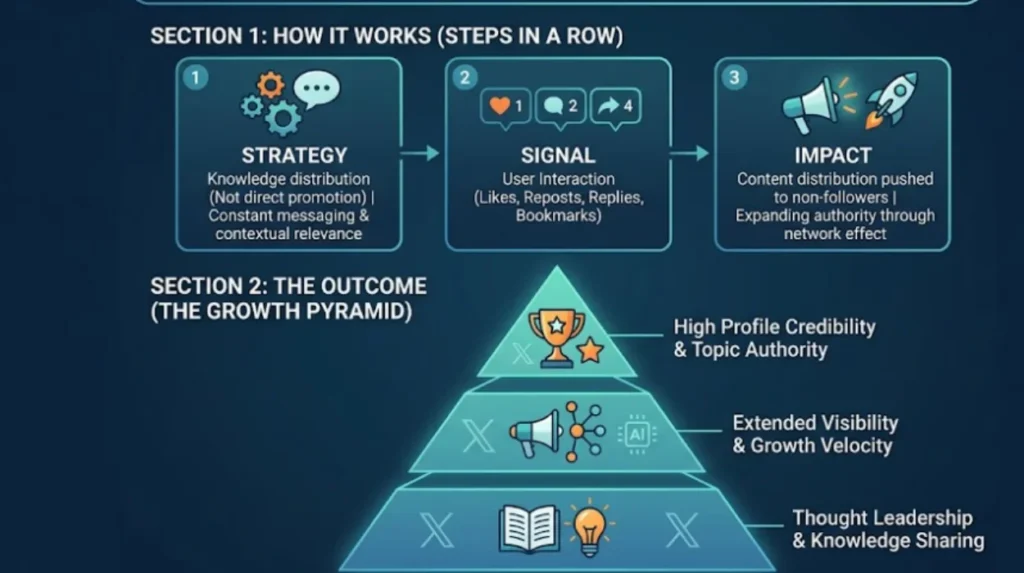
X distributes content according to engagement signals, relevance indicators, audience relationships, and behavioural interaction patterns rather than chronological publication alone. Distribution efficiency increases when content generates meaningful interactions that extend beyond immediate followers.
Content enters the distribution system through first-degree followers before expanding into secondary networks through replies, reposts, bookmarks, profile visits, and conversation participation. Each interaction functions as an engagement signal that increases visibility potential within related communities sharing similar topical interests.
Authority indicators also influence distribution efficiency. Profiles demonstrating consistent topical expertise accumulate stronger relevance associations, allowing future posts to achieve broader exposure among audiences interested in related subjects. This process strengthens audience quality because visibility expands towards users already demonstrating interest in comparable discussions.
Corporate advocacy benefits from distributed engagement because multiple participants generate simultaneous interaction signals. Rather than relying upon one publication stream, the campaign creates numerous distribution pathways that reinforce topical visibility across interconnected audience clusters.
A structured framework evaluates preparation, participation, measurement, and optimisation as connected operational stages instead of isolated publishing activities.
Identify measurable visibility indicators including audience reach, engagement quality, authority development, profile growth velocity, and conversation participation. Clear objectives establish evaluation criteria before publication begins.
Choose participants demonstrating subject expertise and active audience relationships. Profile authority contributes more effectively to sustained visibility than participant quantity alone.
Develop consistent thematic clusters covering industry expertise, organisational knowledge, professional insights, and discussion priorities. Topic consistency strengthens semantic relevance across participating profiles.
Distribute related discussions across complementary time periods instead of simultaneous identical posts. Staggered publishing extends visibility duration and creates repeated engagement opportunities.
Prioritise replies, discussion participation, and contextual commentary rather than identical reposting behaviour. Authentic conversations generate stronger engagement quality and richer audience relationships.
Evaluate engagement signals, audience acquisition, authority indicators, profile visibility, conversation depth, and audience retention. Comparative measurement identifies operational improvements without relying exclusively on follower growth.
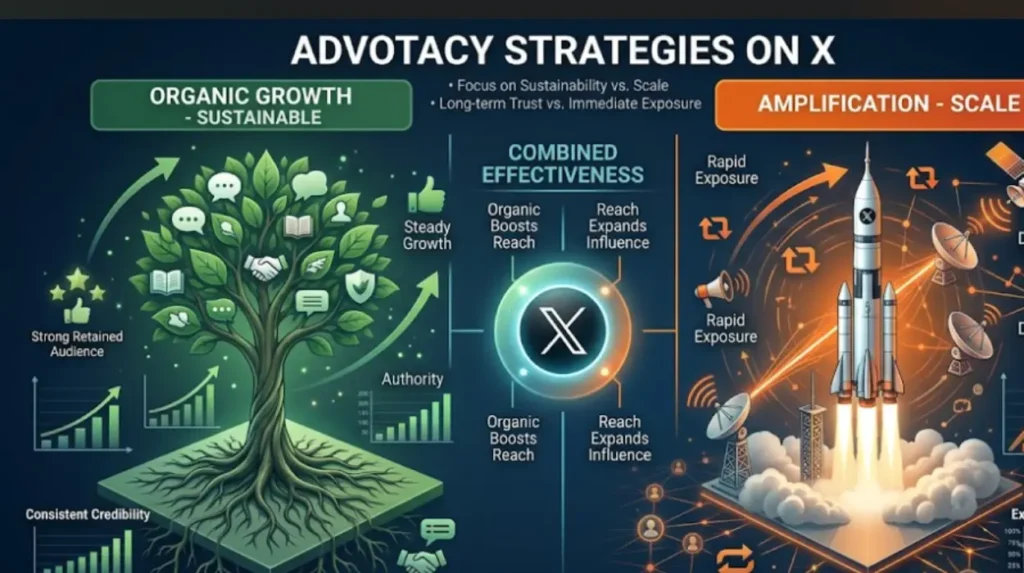
Organic growth strategies prioritise sustainable audience relationships through consistent expertise, while amplification-focused approaches prioritise rapid visibility expansion through coordinated distribution mechanisms. Each framework influences profile development differently.
Organic growth operates by gradually strengthening authority indicators. Consistent educational content, topical relevance, and authentic engagement establish profile credibility over extended periods. Audience acquisition occurs steadily because visibility develops alongside recognised expertise. This approach delivers stronger audience retention and higher engagement quality due to sustained trust formation.
Amplification-focused approaches operate by increasing immediate distribution efficiency through coordinated engagement and broader publication exposure. Visibility indicators improve rapidly because content reaches larger interconnected networks within shorter timeframes. Audience growth velocity increases accordingly, although authority development depends upon maintaining content quality after expanded exposure.
Comparative evaluation demonstrates that organic strategies prioritise sustainability while amplification approaches prioritise distribution scale. Sustainable authority depends upon combining both mechanisms rather than treating them as competing systems. Organic credibility supports amplification effectiveness, while amplification expands opportunities for long-term authority development.
Content-led growth develops visibility through valuable information assets, whereas engagement-led growth develops visibility through active participation in ongoing conversations. Each mechanism influences audience behaviour differently.
Content-led growth operates by publishing educational analysis, industry interpretation, research insights, and structured expertise. High-quality information encourages profile visits, bookmarking behaviour, reposting activity, and recurring audience engagement. Authority indicators strengthen because the profile consistently contributes recognised topical knowledge.
Engagement-led growth operates through replies, discussions, quote posts, and direct interaction with relevant conversations. Visibility expands because active participation increases exposure within established discussion networks. Engagement signals accumulate continuously through conversational activity rather than standalone publications.
Comparative analysis identifies complementary strengths. Content-led growth establishes long-term profile authority through accumulated expertise. Engagement-led growth accelerates visibility by integrating profiles into active communities. Profiles combining both mechanisms achieve stronger audience growth velocity because authoritative content supports conversation participation while discussions expand content discovery opportunities.
Audience acquisition strategies focus on expanding profile reach towards new users, while audience retention strategies strengthen relationships with existing audiences through consistent value delivery. Sustainable profile growth requires balanced performance across both objectives.
Audience acquisition operates by increasing discoverability through relevant conversations, topical visibility, content distribution efficiency, and engagement signals. Success is measured through profile visits, follower growth, impressions, and expanded network reach. Acquisition introduces fresh audiences into the profile ecosystem.
Audience retention operates by maintaining audience interest through consistent publishing themes, reliable expertise, and recurring engagement opportunities. Retention improves engagement quality because established audiences interact repeatedly with recognised sources of information. Stable audience relationships strengthen authority indicators and encourage secondary content distribution.
Comparative evaluation demonstrates that acquisition without retention produces unstable audience growth. Conversely, retention without acquisition limits expansion potential. Balanced strategies generate sustainable audience development by combining continuous discovery with consistent relationship maintenance.
Authority-building methods strengthen long-term credibility, whereas visibility-focused tactics maximise immediate exposure across wider audience networks. These approaches influence profile development through distinct mechanisms.
Authority-building operates through subject expertise, consistent thematic publishing, analytical depth, and reliable engagement quality. Repeated demonstrations of expertise establish topical associations recognised by both audiences and distribution systems. Audience trust strengthens because content maintains predictable quality standards.
Visibility-focused tactics operate by increasing exposure frequency through coordinated participation, timely discussions, and broader distribution opportunities. Immediate impressions expand rapidly because profiles appear within active conversation streams and interconnected audience networks.
Comparative analysis demonstrates that visibility generates awareness while authority converts awareness into sustained audience relationships. Visibility without authority produces temporary exposure. Authority without visibility restricts discovery. Combining both mechanisms supports stronger engagement quality, profile growth, and long-term audience development.
Thought leadership approaches prioritise expertise development through knowledge contribution, whereas promotional content strategies prioritise organisational messaging. These approaches create different audience responses within the X ecosystem.
Thought leadership operates by publishing analysis, interpretation, commentary, and evidence-based discussion around relevant topics. Content contributes independent value beyond organisational announcements, encouraging conversation participation and profile authority. Engagement quality improves because audiences interact with informative material instead of repetitive messaging.
Promotional content strategies operate by communicating announcements, launches, achievements, and organisational updates. Visibility increases temporarily during publication periods, although engagement quality depends upon audience familiarity and existing interest. Promotional frequency exceeding informational value reduces long-term interaction efficiency.
Comparative evaluation indicates that thought leadership strengthens authority indicators while promotional strategies strengthen awareness around specific announcements. Balanced publishing frameworks maintain informational depth while limiting promotional concentration, preserving audience trust and engagement consistency.
Long-term effectiveness depends upon sustainable participation, engagement quality, authority development, audience relevance, and measurement consistency rather than publication volume alone.
Campaign sustainability operates through repeatable publishing systems that participants maintain without excessive resource requirements. Consistent contribution patterns strengthen topical relevance while supporting predictable audience expectations. Stable participation improves authority accumulation across extended periods.
Measurement frameworks evaluate campaign performance through visibility indicators, engagement quality, audience growth velocity, profile authority, conversation depth, and audience retention. These metrics provide a broader assessment than follower counts alone because they reflect behavioural interactions across the distribution network.
Continuous optimisation strengthens campaign performance by identifying high-performing content themes, effective participation patterns, and audience preferences. Analytical evaluation supports gradual improvement without disrupting established authority signals or audience relationships.
Corporate advocacy functions as one component within broader audience development systems by integrating authority-building, content distribution, engagement optimisation, and visibility management into a unified operational framework.
Unlike isolated publishing activities, advocacy strengthens interconnected profile ecosystems where participants collectively reinforce topical relevance. Network effects increase because each profile contributes independent authority while supporting wider content discovery across related audiences. This collaborative structure improves distribution efficiency without concentrating visibility within one account.
Corporate advocacy also complements long-term audience development because coordinated expertise creates stronger trust indicators than repetitive organisational messaging. The framework integrates naturally with broader analytical approaches that evaluate audience growth, engagement quality, authority signals, and profile visibility over time. Organisations evaluating advanced implementation frameworks often compare these principles alongside X corporate advocacy campaign management methodologies to understand operational execution within larger X growth systems.
Corporate advocacy on X represents a distributed authority-building framework rather than a conventional promotional activity. Organic growth strategies prioritise sustainable authority, while amplification-focused approaches increase distribution efficiency. Content-led growth develops recognised expertise, whereas engagement-led growth strengthens conversation visibility. Audience acquisition expands reach, while audience retention reinforces long-term engagement quality. Authority-building establishes credibility, visibility-focused tactics increase exposure, and thought leadership strengthens audience trust more effectively than promotional publishing alone.
Evaluating these approaches demonstrates that sustainable audience development depends upon balancing visibility indicators, engagement quality, authority signals, content distribution efficiency, and network effects. Corporate advocacy performs most effectively when coordinated participation supports authentic expertise, consistent topical relevance, and measurable audience development across interconnected X communities.