
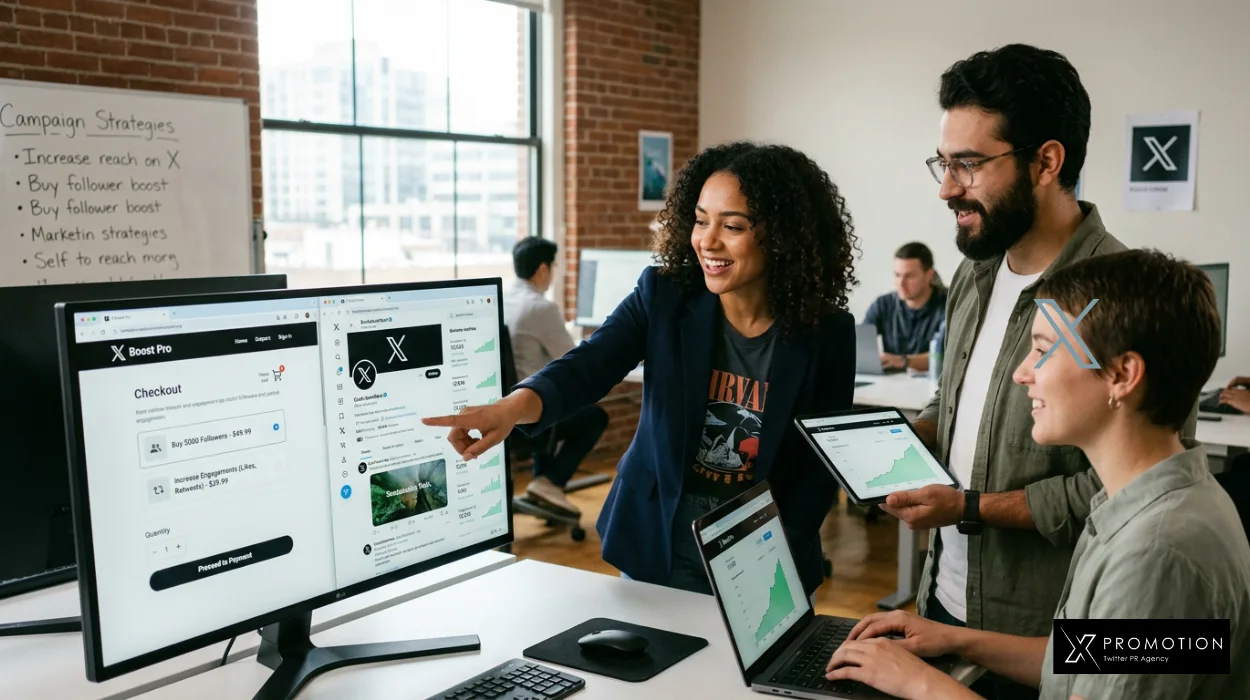
Every day, thousands of X (formerly Twitter) users search for a shortcut to social proof. The question that stops most of them isn’t “does it work?” — it’s “is it actually illegal to buy X followers?” This guide breaks down the legal reality, the platform rules, and what the risks genuinely look like.
The Short Answer: Illegal vs. Against the Rules
These two things are not the same, and confusing them is the root of most misinformation on this topic. Let’s separate them cleanly.
In most countries — including the US, UK, EU, and Canada — buying followers is not a criminal act. No statute specifically criminalizes purchasing social media followers.
X’s Terms of Service explicitly prohibit artificially inflating engagement metrics. Violating ToS can get your account suspended or permanently banned.
If you’re a brand using bought followers to misrepresent reach to advertisers or investors, this can cross into fraud territory — which is a different matter entirely.
What Do Laws Actually Say?
Lawmakers in most jurisdictions have not passed legislation that specifically targets the purchase of social media followers. The act of exchanging money for follower counts sits in a gray area — one that regulators are watching more closely each year, but have not yet fully legislated.
Where It Can Become a Legal Problem
The legal risk escalates when bought followers are used as part of a wider deceptive scheme. Here are three scenarios where civil or criminal liability could realistically emerge:
- Influencer marketing fraud — Brands pay influencers based on follower counts. If an influencer inflates those numbers artificially and charges brands accordingly, this can constitute fraud.
- Securities and investor fraud — Companies have faced regulatory scrutiny for using inflated social metrics to misrepresent public interest to investors.
- FTC deceptive practices (US) — The Federal Trade Commission has broad authority to act on deceptive practices. Using fake social proof in commercial advertising could attract enforcement action.
- Consumer protection laws (EU/UK) — European consumer regulators have moved aggressively on fake reviews and fake engagement. The EU’s Digital Services Act (DSA) creates liability for platforms and, in some readings, for those who manipulate engagement at scale.
X’s Terms of Service: What the Platform Actually Prohibits
X maintains a clear policy against what it calls “platform manipulation and spam.” The relevant section covers:
| Prohibited Activity | Platform Consequence |
|---|---|
| Buying or selling followers, likes, or retweets | Account suspension or permanent ban |
| Using third-party services to inflate metrics | Removal of fake followers, engagement purges |
| Operating fake or bot accounts to follow others | Mass account removal, potential IP ban |
| Coordinated inauthentic behavior | Account strikes, content removal, suspension |
X conducts periodic algorithmic purges — where large volumes of fake or bot accounts are removed at once. If your account benefited from bought followers, you’ll see a sudden follower drop during these purges.
How X Detects Artificial Follower Growth
X’s trust and safety systems have grown significantly more sophisticated. Understanding what they flag is useful context for anyone evaluating the actual risk:
- 1Engagement ratio analysis — An account with 50,000 followers but only 3–5 likes per post triggers anomaly detection. Real audiences produce proportional engagement.
- 2Follower profile auditing — Bot and fake accounts tend to share patterns: no profile photo, accounts created in bulk on the same date, no posting history.
- 3Sudden growth spikes — Gaining 5,000 followers in 24 hours is a red flag unless you’ve gone viral. Systems flag abnormal velocity.
- 4Third-party service monitoring — X monitors known seller domains and services. Accounts linked to these services are at higher risk of detection.
Country-by-Country Overview
The legality question looks slightly different depending on where you are:
| Region | Legal Status | Notable Considerations |
|---|---|---|
| United States | Gray Area | Not illegal for personal use; FTC enforcement targets deceptive commercial use |
| European Union | Gray Area | DSA increases scrutiny; consumer protection laws apply to business use |
| United Kingdom | Gray Area | ASA advertising standards target fake social proof in marketing claims |
| Australia | Not Illegal | ACCC may investigate deceptive marketing uses; personal use unregulated |
| India | Not Illegal | No specific legislation; general fraud laws apply if used deceptively |
The Real Risks Worth Thinking About
Setting aside the legal framing — which is mostly theoretical for ordinary users — the practical risks of buying X followers are more immediate.
Low engagement rates from fake followers signal poor content to X’s algorithm, which suppresses reach to real audiences.
X can and does suspend accounts for ToS violations. Verified accounts and X Premium subscribers are not exempt.
Purchased followers don’t read, click, buy, or share. The ROI on fake follower purchases is, by design, zero.
Tools like SparkToro and Audiense make fake follower counts visible to anyone who checks. Journalists and brands routinely audit this before partnerships.
What About Buying Followers for a Brand or Business?
The risk profile changes when commercial stakes are involved. A business that publicly advertises “500K followers” to attract clients, press coverage, or investment — while knowing those followers are largely bots — is in a more precarious position legally than an individual user who quietly purchased followers for vanity metrics.
Advertising regulators in multiple countries have begun treating inflated follower counts as a form of false advertising when used in commercial contexts. The UK’s Advertising Standards Authority, for example, has sanctioned influencers for using bot-inflated metrics in sponsored post disclosures.
Organic vs. Purchased Follower Growth: A Reality Check
| Factor | Bought Followers | Organic Followers |
|---|---|---|
| Legal risk | Low (personal) / Medium (commercial) | None |
| Platform ToS compliance | Violates ToS | Compliant |
| Engagement quality | Negligible | High |
| Algorithm impact | Negative (dilutes rate) | Positive |
| Monetization potential | None from followers | Direct |
| Account safety | At risk | Safe |
Common Misconceptions Cleared Up
“Everyone does it, so it must be fine”
Prevalence doesn’t imply legality or safety. Widespread use of a practice that violates platform rules still carries individual account risk — especially as detection systems improve.
“If I buy from a reputable site, X can’t tell”
X monitors third-party services, engagement patterns, and account behavior at scale. The sophistication of seller services and the sophistication of platform detection systems are in an arms race — and platforms have structural advantages.
“I’ll just buy a small amount to boost initial credibility”
Even small purchases create detectable anomalies if the followers are bots or low-quality accounts. The “social proof” benefit is also less persuasive to real users than many assume.
Want Real X Growth — Without the Risk?
Genuine follower growth on X comes from strategy, content, and the right positioning. Explore ethical X growth services that work within platform guidelines.
Explore X Growth Services →The bottom line is that buying X followers occupies a legal gray area for most ordinary users — it isn’t a crime in the way shoplifting or fraud is a crime. But it consistently violates X’s Terms of Service, carries real account risk, and produces no meaningful return. For businesses using follower counts as commercial evidence, the legal exposure is more concrete. The more useful question for most people isn’t whether it’s illegal — it’s whether it’s worth it.
Frequently Asked Questions
No. In virtually every jurisdiction, purchasing followers on X is not a criminal act and does not expose an individual to arrest. The practice may violate X’s Terms of Service — which can result in a suspension — but it is not treated as a crime by law enforcement. Legal risk increases only if bought followers are used as part of a broader fraud scheme, such as deceiving advertisers or investors about your actual reach.
X’s Terms of Service explicitly prohibit buying or selling followers, and the platform actively enforces this policy. Enforcement ranges from removing fake followers during periodic purges to suspending or permanently banning accounts that show patterns consistent with artificial inflation. The risk depends on the scale, the quality of the followers purchased, and how actively X’s detection systems flag your account’s behavior at the time.
For businesses, the legal risk is more significant than for individual users. If a brand uses inflated follower counts as evidence of audience size when dealing with advertisers, sponsors, or investors, this can constitute a form of misrepresentation or fraud under civil law. In the US, the FTC’s deceptive practices authority covers this. In the EU and UK, consumer protection and advertising standards laws have been applied to fake social proof in commercial contexts. Brands should be especially cautious.
No — and they can actively hurt organic growth. X’s algorithm measures engagement rate (likes, replies, retweets relative to follower count). When a large portion of your followers are bots or inactive accounts that never engage, your engagement rate drops. This signals to X’s algorithm that your content is low quality, which reduces how often it’s shown to real users. You end up with more followers but less actual reach.
X runs periodic enforcement sweeps that identify and remove accounts showing bot-like characteristics — such as no profile photo, bulk creation dates, no posting history, or patterns matching known fake account networks. When these purges occur, any bought followers that match these profiles are removed, causing sudden follower count drops. Accounts that experienced large unexplained drops after these events are often those with purchased follower histories.